- Your cart is empty
- Continue Shopping

Price range: $199.00 through $999.00
Description
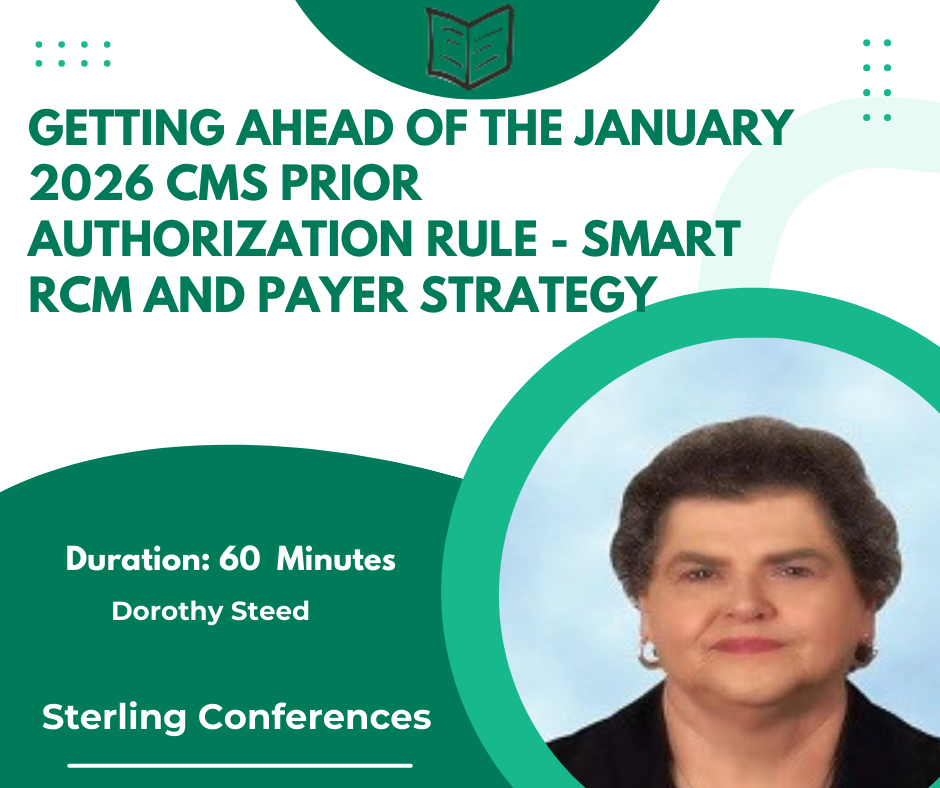
Starting January 2026, payers will be required to adopt FHIR-based API workflows, shorter turnaround times (standard in 7 days, expedited in 72 hours), and greater transparency in prior authorization.
Learning Objectives:-
Areas Covered:-
The Wasteful & Inappropriate Service Reduction (WISeR) model is a pilot program that introduces prior authorization for certain services under traditional (Original) Medicare in six states, effective January 1, 2026. The program will run through December 31, 2031.
Why Should You Attend?
The program’s intent focuses on the reduction of fraud, waste & abuse in federal healthcare spending & preventing payment for services that are low-value or not medically necessary. This is a mandatory pilot program applicable to six states, including Arizona, New Jersey, Ohio, Oklahoma, Texas & Washington. This webinar will review the types of outpatient procedures & items considered at risk for overuse or fraud that will require authorization. Included will be documentation requirements and how to appeal denied claims. Ensure you and your staff understand the expectations and implementations needed to protect your revenue.
Who Will Benefit?
| sss | Live, Recording, Transcript, Live + Recording, Recording + Transcript, Live + Transcript, Live + Recording + Transcript, Bundle for 3, Bundle for 6 |
|---|






Reviews
There are no reviews yet.